Concrete Barn Floor Installation in Wilmington, Ohio
Durable concrete barn floor installation across Wilmington and Southwest Ohio. Agricultural barns, livestock operations, pole barns, and working farm floors built for real use.
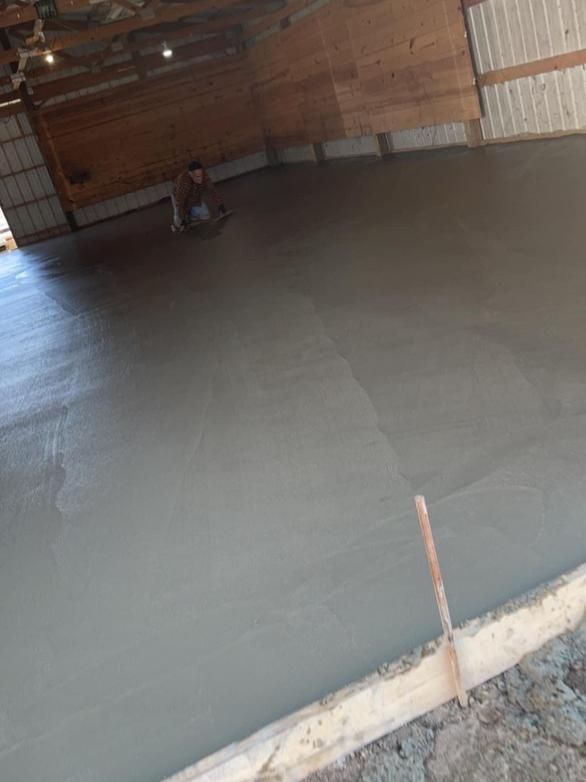
Floors That Stand Up to Real Farm Work
A barn floor isn't a decorative slab — it's a working surface that has to handle tractors, livestock, feed equipment, manure, wash-down, and whatever else comes with actual agricultural use. Pour it wrong, and you're dealing with cracks, uneven settling, drainage problems, and maintenance headaches for the next 20 years.
Corbett's Contracting has been pouring barn floors across Wilmington, Ohio and Southwest Ohio for working farms, hobby operations, and agricultural properties. We understand how barns actually get used, which is why our floors last.
Livestock barns, hay storage, equipment barns, wash bays, feed alleys, stall floors — we've poured for all of it, and we spec each one to the real conditions it'll see.
Built for Agricultural Reality
Every barn has different demands. Here's what we pour for rural Ohio properties.
Livestock Barn Floors
Slip-resistant, easy-to-clean floors for cattle, horse, dairy, and small-livestock operations. Proper slope for drainage and wash-down.
Equipment & Tractor Barns
Heavy-duty reinforced slabs spec'd for tractor traffic, combines, implements, and farm equipment storage. Thick, strong, built to outlast the equipment.
Hay & Feed Storage
Clean, dry concrete floors for hay storage, feed rooms, and grain bins. Prevents ground moisture infiltration and pest issues.
Wash Bays & Milk Rooms
Specially sloped and drained concrete for equipment wash, livestock wash bays, and dairy milk rooms. Built to spec for water management.
Stall & Alleyway Floors
Stall dividers, center aisles, and feed alleys poured with livestock in mind — smooth enough to clean, textured enough to be safe when wet.
Pole Barn Floor Pours
Concrete floors poured inside existing pole barns or new builds. See also our pole barn construction page.
Our Barn Floor Process
Scheduled around your operation, done in phases if needed so the livestock and equipment aren't locked out forever.
On-Site Walk
We walk the barn, understand what happens inside it, measure, and plan the pour around your operation.
Prep & Grade
Strip topsoil, grade to proper slope for drainage, compact the sub-base, and form the perimeter.
Pour & Finish
Vapor barrier where needed, rebar/mesh reinforcement, pour, and broom or textured finish for livestock safety.
Cure & Turnover
Proper cure time, joint cuts, and a walk-through. We'll tell you exactly when to put animals and equipment back on it.
Barn Floors Across Southwest Ohio
Working farms, hobby barns, horse properties, and agricultural operations throughout the region.
Barn Floor Questions
Pour a Barn Floor That Works as Hard as You Do
Free estimates on barn floors across Wilmington and Southwest Ohio. Working farms, hobby barns, and everything in between.